2026-08-29 ·
No Hot Water? Common Causes and Fixes for Santa Clara Homes
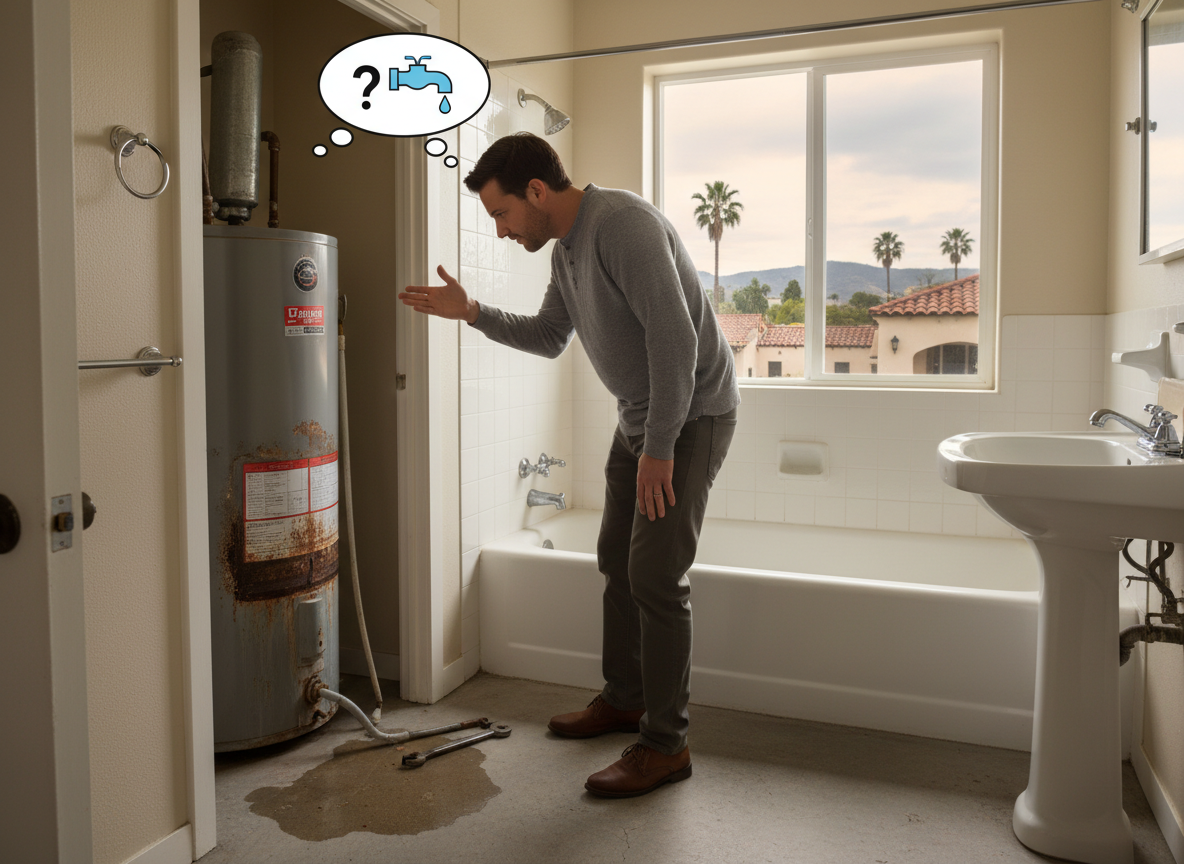
No hot water in Santa Clara homes most often traces to sediment buildup, failed heating elements, or thermostat failure, and a technician can usually restore service the same day once the exact cause is isolated.
Sediment Buildup in Older Tanks
Santa Clara County water carries minerals that settle in the bottom of tanks, especially in homes built before 1990 around Downtown Santa Clara and near Santa Clara University. Over time the layer insulates the burner or lower element, so water never reaches temperature even though the unit runs. In the cool wet winters typical of the mild Mediterranean climate, households increase hot-water use for showers and laundry, which accelerates the problem. Flushing the tank twice a year removes most loose sediment; when the layer is compacted, a technician drains the unit, removes the anode rod for inspection, and uses a wet-vac to clear the remaining debris. Homes in Rivermark with 50- to 80-gallon tanks often need this service every 18 to 24 months because larger volumes hold more mineral load. Persistent milky water or popping sounds during heating are early signs that flushing alone will not restore full capacity.
Faulty Heating Elements and Thermostats
Electric tanks common in Lawrence Station and Agnew neighborhoods rely on upper and lower elements that burn out after 8 to 12 years. When the lower element fails first, the tank still produces some warm water from the top element, leading homeowners to believe the unit is only “lukewarm.” A continuity test with a multimeter confirms failure; replacement requires draining, shutting off power at the breaker, and installing a new element rated for the tank’s voltage. Gas models in the same areas lose heat when the thermostat capillary tube cracks or the high-limit switch trips. Technicians replace the entire thermostat assembly rather than attempting adjustment, because the original calibration drifts after repeated heating cycles. These repairs typically take 90 minutes once power and water are isolated.
Pilot Light and Gas Valve Issues
Many homes near Central Park and Mission Santa Clara still operate older atmospheric gas water heaters whose pilot lights go out during the cool, damp winter months when barometric pressure changes. A weak thermocouple is the usual culprit; it fails to sense flame and shuts the gas valve. Replacement involves removing the burner assembly, threading in a new thermocouple, and relighting while checking for proper flame color. If the gas valve itself sticks or leaks, the entire control must be swapped, a job that requires shutting off the main gas line and testing for leaks with soapy water. Homeowners should never attempt to bypass the thermocouple or hold the pilot button indefinitely.
When Replacement Makes Sense
If a tank is more than 12 years old and has already required two repairs, replacement often costs less than repeated service calls. In Santa Clara’s housing stock, many 40-gallon units installed in the 2000s are now reaching the end of service life. Homeowners weighing options can read Tankless Water Heater Installation in Santa Clara: Is It Worth It? to compare space savings and efficiency gains. For immediate help with no hot water, schedule through the dedicated no-hot-water-repair page. Technicians also handle standard water heater repair across Santa Clara County neighborhoods and offer 24/7 emergency service every day of the week.